
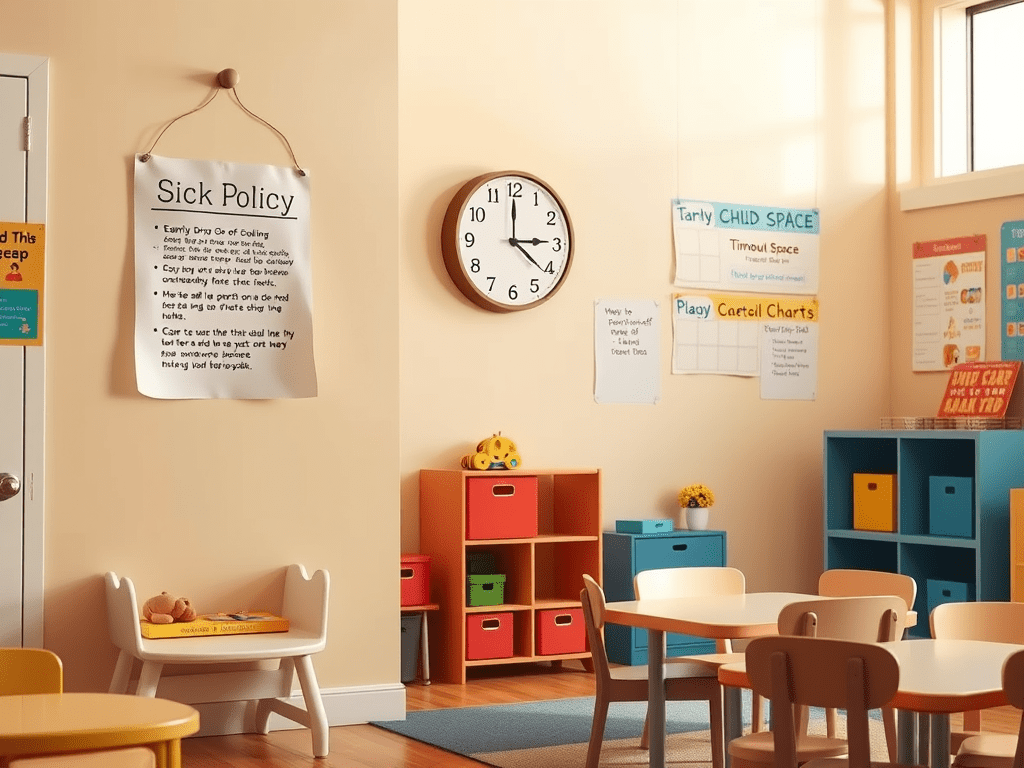
I learned the hard way that policies are important for no matter how many children you watch, and no matter how well you know the parents. It makes decision making easy for you, and doesnt leave any surprise for the parents.
The first policy to consider is your sick policy. This will vary depending on how many children you care for and your personal comfort level with handling illnesses. You can find many sample sick policies online to help you decide what you’re comfortable with and what guidelines you want to set.
For instance, I’m okay caring for a child with a runny nose or a mild cough due to allergies. If I’m only watching that one child, even a low-grade fever doesn’t concern me much. However, when I have multiple children in my care, I can’t allow any child with a fever to attend. My policy is that any child with a fever over 100°F must stay home and can only return 24 hours after the fever has broken without the use of medication.
Another important policy to consider is your early drop-off and late pick-up policy. Occasionally adjusting your hours or helping a parent who needs extra support is understandable. However, when early drop-offs or late pick-ups happen regularly—especially without communication—it can disrupt your day and strain your relationship with the family.
A helpful policy to implement is charging $1 per minute for late pick-ups beyond your regular business hours. This not only compensates you for your extra time, including providing a snack or keeping the child entertained, but it also encourages parents to respect your schedule and remain accountable.
Finally, you want to consider a discipline policy. It is no surprise that children will act up, occasionally not listen, but when it becomes disruptive or could result in harm of themselves or someone else in your care, you have to be able to take action.
It has been most helpful in my experience to discuss with the parents what they do at home, and what works best for them. You also want to discuss what they are comfortable with you doing when their child is in your care. Some examples of consequences that are appropriate to implament in your facility are sitting in a designated area to give them time to collect themselves. Remove screen time. Or even simply letting the child know you will be discussing their behavior with their parent can cause a child to straighten right up because they do not want to be in trouble when they get home.
Stay tuned to drafts of my sample policies I will be posting soon!
 Welcome!
Leave a comment